
Looking Beyond the Diagnosis: Why the New Inflammatory Neuropathies Report Matters

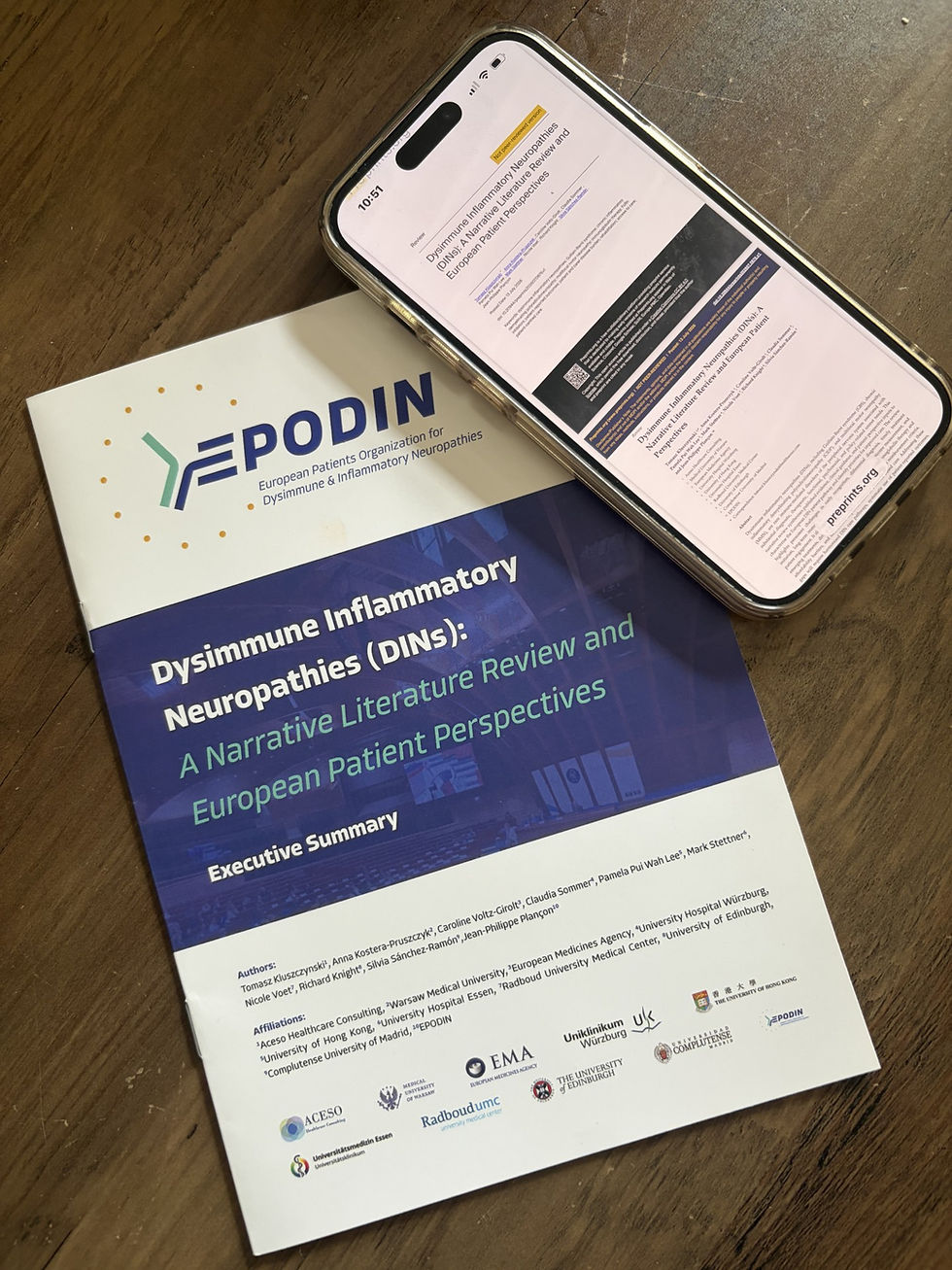
As you will know, we have been working with EPODIN (the European network of Inflammatory Neuropathies patient groups) for many years, and we have been excitedly awaiting the publication of their paper around Dysimmune Inflammatory Neuropathies (DINs). Well, it’s here at last, and it’s one of those reports that comes along every so often that makes you stop and think, "Yes, that's exactly what we've been saying."
The paper brings together the latest evidence about Guillain Barré Syndrome (GBS), Chronic Inflammatory Demyelinating Polyradiculoneuropathy (CIDP) and Multifocal Motor Neuropathy (MMN), but what makes it different is that it doesn't just focus on medicine, it focuses on people. Alongside the research and clinical evidence are the voices and experiences of people living with these conditions across Europe.
This focus on people doesn't always happen. Too often, healthcare is measured by appointments, tests and treatments. This paper reminds us that life with an Inflammatory Neuropathy is about much more than that.
One of the things that really stood out to me was how familiar so much of it felt. Reading through the report, I recognised countless conversations we've had with our own community over the years. The frustration of waiting for a diagnosis. Being told it's something else. Fighting to access treatment. Living with fatigue that nobody else can see. Trying to rebuild life after the condition itself has been treated. These aren't isolated stories. They're common experiences.
The paper highlights that many people still experience delays in diagnosis and that, across Europe, a significant number of people with these conditions may not even have been diagnosed yet. It also points to differences in access to treatment, rehabilitation and specialist care depending on where people live.
Whilst the report looks across Europe, it raises questions that are just as relevant here in the UK.
How quickly are people receiving specialist care? Can everyone access the rehabilitation and support they need? Are we listening to people when we decide what good care and support looks like? Those are questions we ask ourselves all the time at Inflammatory Neuropathies UK.
The report also reinforces something we've been talking about for years. Success isn't simply about whether someone receives treatment. It's about what happens afterwards as well. Can they get back to work? Can they enjoy family life? Can they go for a walk without worrying they'll pay for it the next day? Can they feel confident again? Those things matter just as much.
I was also pleased to see the emphasis the paper places on involving patients in research, policy, and decision making. As you and me clearly know, people living with Inflammatory Neuropathies are experts in their own condition. Your experiences shouldn't be treated as an afterthought. They should help shape the services, treatments and research that are designed for you.
Putting people first is at the centre of what we do. Whether we're responding to NHS consultations, working with researchers, speaking to politicians, or supporting clinical guidelines, we're there to make sure the lived experience of our community is heard. This paper strengthens that case because it brings together evidence from across Europe that backs up what our community has been telling us for years.
It's also encouraging to see the report looking ahead. There are exciting developments in treatments, improvements in diagnosis and growing recognition of the importance of rehabilitation, and measuring the things that matter to patients, not just clinicians. That's good news. But the paper is equally clear that there's still a long way to go. For me, that's probably the biggest takeaway.
We've made real progress, but we can't become complacent. Better treatments are important, but they are only part of the picture. Earlier diagnosis, fair access to specialist care and support, high quality rehabilitation, emotional support, and genuinely listening to people with lived experience all have to be part of the conversation too. As a charity, that's exactly where we'll keep focusing our energy.
If I had to boil the whole report down into five key messages, they'd be these:
Too many people are still waiting too long for a diagnosis. The paper highlights that delays and misdiagnosis remain common across Europe, meaning people often wait longer than they should before getting the right treatment and support
Inflammatory Neuropathies impact every part of life, not just mobility. Fatigue, pain, mental wellbeing, work, finances and family life all have a huge impact, reminding us that treating the condition is only one part of helping someone recover
Rehabilitation is just as important as treatment. Medicines play a vital role, but people also need access to specialist rehabilitation and ongoing support to help them regain independence and live well after diagnosis
People with lived experience need to be at the heart of decisions. The paper strongly supports involving patients in research, service design, and policy making because no one understands these conditions better than those living with them every day
There is real reason to be optimistic. New treatments are being developed, understanding of these conditions continues to grow and there is increasing recognition that care should focus on the whole person, not just the condition itself
If you'd like to read the report yourself, I'd really encourage you to do so. It's a big read, it’s incredibly comprehensive, and it can feel like a bit of a slog. However, it does provide one of the clearest overviews I've seen of where things stand for people living with Inflammatory Neuropathies today.
You can read the full White Paper here:
I'd be interested to hear what you think. Does it reflect your own experience? Has your journey been similar, or very different? Conversations like that are how we continue learning, improving, and making sure the voice of our community stays at the heart of everything we do.


